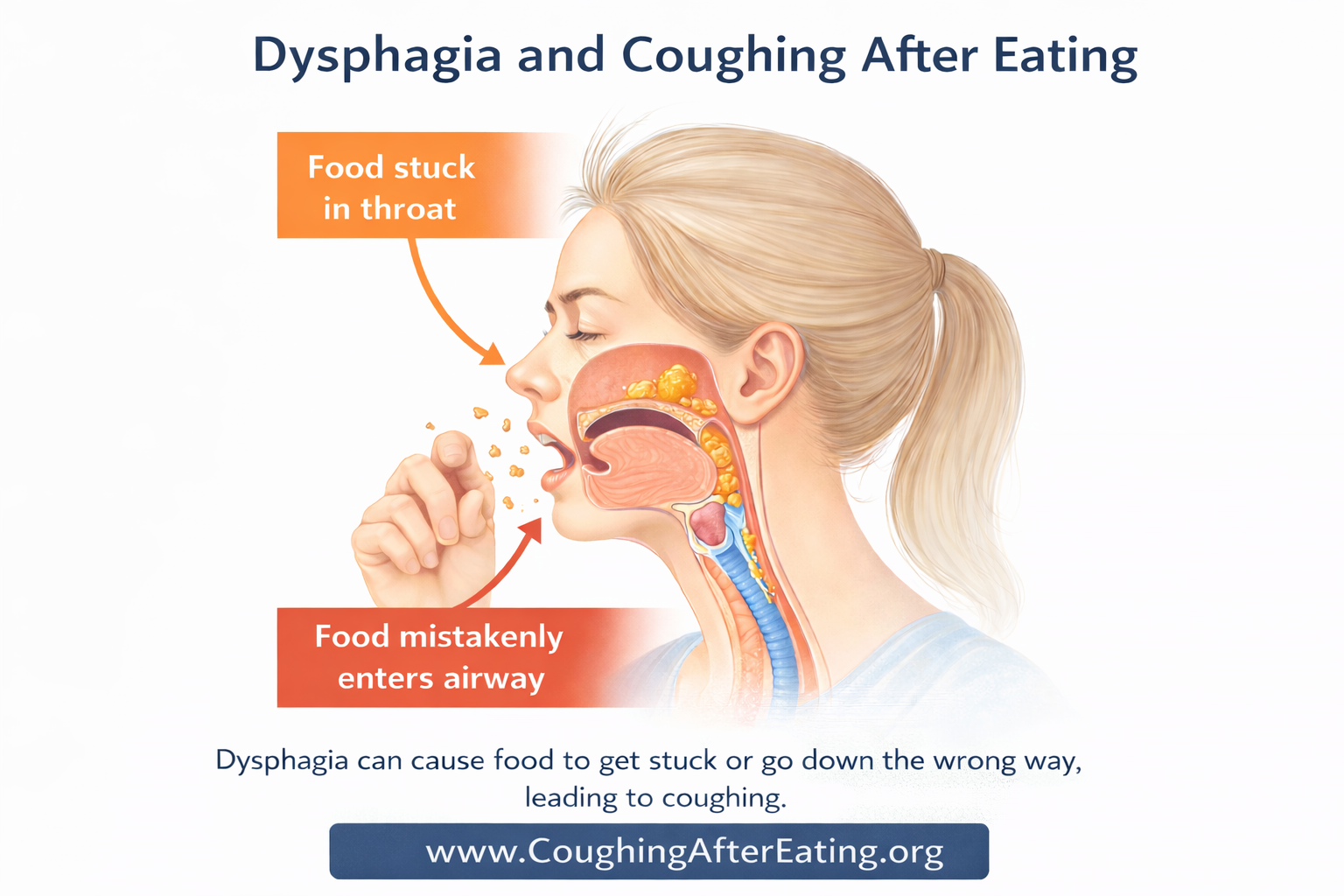
Why dysphagia causes coughing after eating and what it means
Coughing after eating that happens during swallowing or immediately afterward is often linked to a swallowing problem rather than reflux. One of the most important causes in this category is dysphagia, where swallowing does not work as smoothly or safely as it should.
This timing difference matters because coughing during eating or within seconds of swallowing usually points to airway protection or coordination issues, while coughing that appears later is more often linked to reflux. Dysphagia causes coughing after eating when food or liquid does not move safely through the throat and may briefly enter the airway, triggering an immediate protective cough reflex.
This is more likely if your cough starts while eating, especially with certain textures or liquids, and follows a consistent pattern rather than appearing randomly. If you want to understand how this fits into the bigger picture, see the coughing after eating causes guide.
What is dysphagia and why it causes coughing after eating
Dysphagia refers to difficulty swallowing, but in practice it usually means that the timing or coordination of swallowing is slightly disrupted. Swallowing involves precise coordination between the mouth, throat, and airway, and even small changes can affect how safely food moves.
When this coordination is not working properly, food or liquid may move too slowly, linger in the throat, or briefly enter the airway before it fully closes. The body responds immediately by triggering a cough to protect the lungs. Clinically, swallowing-related coughing is distinguished by its timing during eating, which helps separate it from reflux-related causes that typically appear later.
This mechanism is closely related to what happens when food goes down the wrong way and causes coughing after eating, although dysphagia tends to be more consistent and repeatable rather than occasional.
How dysphagia-related coughing usually feels
The pattern of coughing in dysphagia is usually very consistent and differs clearly from reflux-related coughing. Instead of appearing later, dysphagia causes coughing during swallowing or immediately afterward, often while food or liquid is still being processed in the throat.
People often notice that coughing starts while eating, especially with certain textures or when drinking liquids, and it may feel like something is not going down properly or briefly “going the wrong way.” In some cases, the cough is brief and clears quickly, while in others it may repeat several times during a meal.
This pattern overlaps with what is seen in why do I cough immediately after eating, where timing is the key clue that the trigger is happening during swallowing rather than digestion. This is more likely if coughing starts during eating and repeats in a similar way across meals.
Common signs that point toward dysphagia
Dysphagia does not always feel dramatic. In many people, the symptoms are subtle but repeatable.
Common signs include:
- Coughing during or immediately after swallowing
- Feeling like food is sticking in the throat
- Needing to swallow multiple times for one bite
- Difficulty with certain textures, especially dry foods or thin liquids
- Occasional choking or gagging sensations
- A wet or gurgly voice after eating
These symptoms are more likely to suggest a swallowing-related cause when they appear together and follow a consistent pattern during meals.
Dysphagia vs aspiration: understanding the difference
Dysphagia and aspiration are closely related but not the same. Dysphagia refers to difficulty or disruption in swallowing, while aspiration happens when food or liquid actually enters the airway instead of the esophagus.
In many cases, dysphagia increases the risk of aspiration because swallowing coordination is not fully effective, allowing small amounts of material to move in the wrong direction. This is why dysphagia-related coughing is often discussed alongside aspiration when eating and coughing causes, especially when coughing is strong or repetitive during meals.
In simple terms, dysphagia affects how swallowing works, while aspiration describes what happens when that process fails and material enters the airway.
Why liquids often trigger coughing more easily
One common pattern in dysphagia is that liquids trigger coughing more easily than solid food. Liquids move faster and require precise timing between swallowing and airway closure, so even a small delay or mismatch in coordination can allow liquid to reach the airway before it is fully protected.
This is why some people cough more when drinking water or other thin liquids, especially when drinking quickly or taking larger sips. This pattern is also seen in why do I cough after drinking liquids, where coordination plays a major role.
This is more likely if you cough more with drinks than with solid food, especially when taking larger or faster sips.
What causes dysphagia in the first place
Dysphagia can develop for several reasons, and not all of them are severe.
Common causes include:
- Age-related changes in swallowing coordination
- Muscle weakness in the throat
- Neurological conditions affecting timing and control
- Oesophageal narrowing or movement problems
- Temporary effects from illness, fatigue, or stress
These causes can vary in severity, but they all affect how safely and efficiently swallowing works. Clinically, dysphagia is recognised as a common cause of coughing during meals because even small disruptions in swallowing coordination can trigger airway protection reflexes.
How dysphagia differs from reflux-related coughing
Dysphagia and reflux can both cause coughing after eating, but the timing and sensation are different. Dysphagia-related coughing usually happens during swallowing or immediately afterward and often feels like something is not going down properly.
Reflux-related coughing tends to happen later, often several minutes after eating, and is more likely to feel like irritation or a tickling sensation in the throat. Understanding this difference helps distinguish dysphagia from conditions like why GERD causes coughing after eating or silent reflux coughing after eating, where the mechanism is irritation rather than swallowing disruption.
In simple terms, dysphagia-related coughing happens during swallowing, while reflux-related coughing happens after eating.
When dysphagia-related coughing needs attention
Occasional coughing while eating can happen to anyone. However, repeated or worsening symptoms should not be ignored.
You should pay closer attention if:
- Coughing happens frequently during meals
- Food regularly feels stuck
- There is repeated choking or difficulty swallowing
- Eating becomes slow or uncomfortable
- Unintentional weight loss develops
For a broader view of warning signs, see when coughing after eating is serious.
What you can do if you suspect dysphagia
If your symptoms suggest dysphagia, simple adjustments can sometimes help improve swallowing safety.
These include:
- Eating slowly and taking smaller bites
- Sitting upright during meals
- Avoiding distractions while eating
- Taking smaller sips rather than large gulps
- Paying attention to textures that trigger symptoms
If symptoms persist or worsen, medical evaluation may be needed to assess swallowing function more closely.
How dysphagia fits into the bigger picture
Dysphagia is one of the most important causes of coughing that happens during eating rather than after digestion, and it differs clearly from reflux-related causes.
It overlaps with airway protection issues such as aspiration but follows a more consistent pattern linked to swallowing itself. Understanding this distinction helps you interpret your symptoms more accurately and choose the right next step.
If you want a complete breakdown of all causes and how they differ, return to the coughing after eating causes guide. This helps separate dysphagia from reflux-related causes and improves how accurately symptoms are interpreted.
Pattern signal
Coughing during or immediately after swallowing usually points to dysphagia or airway protection issues. Coughing that appears later after meals is more likely related to reflux or digestion.
This timing difference is one of the most reliable ways to distinguish swallowing-related causes from reflux-related causes.
Final takeaway
Dysphagia-related coughing after eating is not random. It usually follows a clear pattern linked to swallowing.
Coughing that starts during eating, especially with liquids or certain textures, is more likely to be caused by swallowing coordination or airway protection issues rather than reflux.
Recognising this timing pattern is the key to understanding whether dysphagia may be involved.
Common questions about dysphagia and coughing after eating
These common questions help clarify how dysphagia causes coughing after eating and how its pattern differs from other causes.
Is dysphagia always serious?
No. In many cases, dysphagia is mild and manageable, but persistent or worsening symptoms should be evaluated.
Why do I cough more with water than food?
Liquids move faster and require more precise coordination, which makes them more likely to trigger coughing if timing is slightly off.
Can dysphagia happen suddenly?
Yes. It can appear suddenly due to illness, fatigue, or temporary changes in swallowing coordination.
Is dysphagia the same as choking?
No. Dysphagia refers to difficulty swallowing, while choking is a more severe blockage, although dysphagia can increase the risk.