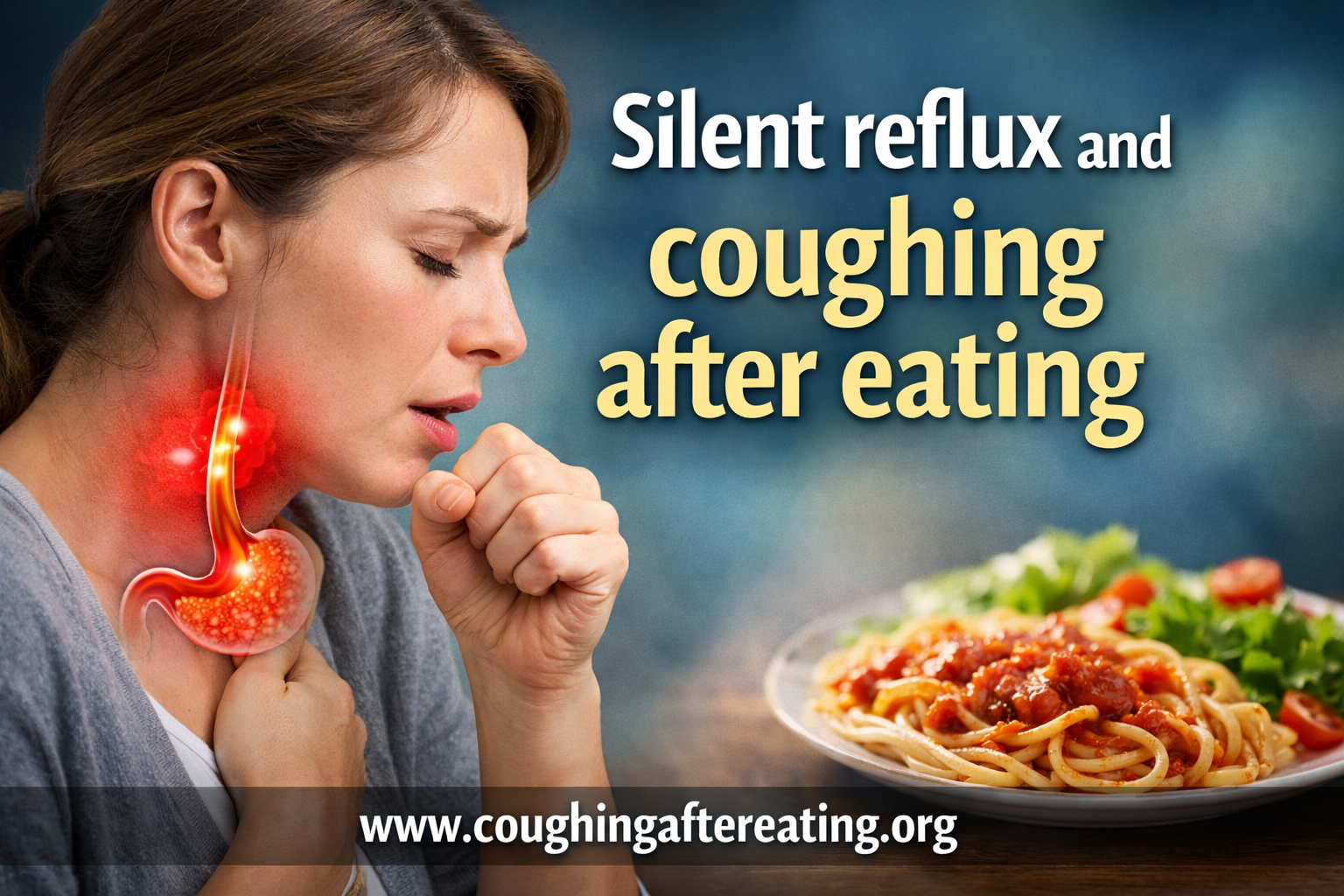
Silent reflux (LPR) and coughing after eating: why it happens without heartburn
Coughing after eating is often linked to acid reflux, but not all reflux behaves the same way. In some cases, the problem is not classic heartburn but a quieter form known as silent reflux.
Silent reflux, also called laryngopharyngeal reflux (LPR), can irritate the throat without causing obvious burning in the chest. It is a common but often overlooked cause of coughing after eating, especially when symptoms appear without heartburn.
This pattern becomes more likely when coughing starts shortly after meals, especially after heavy, acidic, fatty, or late-evening eating, and when the cough is paired with throat clearing, hoarseness, or a lingering throat tickle rather than chest congestion. In many people, the symptom pattern feels more like a throat problem than a stomach problem, which is one reason silent reflux is often missed at first.
If you want to understand how this fits into the bigger picture, start with the coughing after eating causes guide, which explains how reflux, swallowing issues, and airway sensitivity connect.
What is silent reflux?
Silent reflux happens when stomach contents travel upward beyond the esophagus and reach the throat or voice box.
Unlike typical reflux, it does not always cause heartburn, which is one reason it can be harder to recognise. The term laryngopharyngeal reflux is used because the irritation affects the larynx and pharynx rather than staying limited to the lower chest area.
How silent reflux differs from typical acid reflux
In classic reflux, acid usually remains lower in the esophagus and causes a burning sensation in the chest.
Silent reflux behaves differently. It reaches higher areas such as the throat and larynx. Because these tissues are more sensitive, even small amounts of reflux can trigger irritation without causing noticeable heartburn.
Why it often goes unnoticed
The lack of obvious digestive symptoms means many people do not immediately connect their cough to reflux.
Instead, they may assume the cause is allergies, throat dryness, minor irritation, or a lingering infection. Some people also mistake it for repeated mucus buildup or a need to keep clearing the throat for no obvious reason.
This delay in recognition is why silent reflux-related coughing often persists longer than expected.
If your symptoms feel throat-based rather than chest-based and appear after meals, silent reflux becomes a much more likely explanation than typical heartburn-related reflux.
Mechanism: Silent reflux-related coughing happens when small amounts of stomach contents travel upward after eating and irritate the throat and larynx, triggering a cough reflex even without heartburn.
Why silent reflux causes coughing after eating
Coughing in silent reflux is not random. It happens when stomach contents reach and irritate sensitive areas of the throat that are closely linked to the cough reflex.
How reflux reaches the throat
After eating, the stomach becomes more active as it processes food. If the valve between the stomach and esophagus is weak or relaxes too easily, small amounts of stomach contents can move upward.
In silent reflux, that upward movement goes beyond the esophagus and reaches the throat, where it can directly irritate the lining. Even small amounts can trigger a strong reaction because the throat is not designed to tolerate repeated exposure.
Why there is no heartburn
One of the defining features of silent reflux is the absence of typical reflux symptoms. The acid may not remain long enough in the esophagus to create burning in the chest, but it can still reach the throat.
As a result, many people experience coughing after eating without any obvious chest discomfort, which makes the condition easier to miss.
Why coughing is triggered
The throat and larynx are extremely sensitive. When reflux reaches these areas, it activates protective reflexes, including coughing.
Even minimal irritation can trigger this response. Over time, repeated exposure can increase airway sensitivity, making coughing easier to trigger after meals. In some people, this repeated irritation also creates a cycle of throat clearing, dryness, and cough that continues even when the reflux episode itself is small.
This mechanism is closely related to why GERD causes coughing after eating, although silent reflux usually affects higher parts of the airway.
Silent reflux causes coughing after eating by allowing stomach contents to reach and irritate the throat, where even small amounts can trigger a strong cough reflex. Because this often happens without heartburn, the pattern is easy to overlook.
This becomes more suggestive of silent reflux when coughing begins after the meal rather than during swallowing, especially if it is worse after large meals, late meals, bending over after eating, or lying down too soon.
If that pattern sounds familiar, silent reflux becomes a much stronger possibility than a swallowing-related cause.
If coughing starts after the meal rather than during swallowing and feels throat-based rather than chest-based, silent reflux becomes a more likely cause than a swallowing-related problem.
Common symptoms of silent reflux after eating
Silent reflux usually does not present with dramatic digestive symptoms. Instead, it tends to produce subtle but persistent throat-related signs.
Throat-related symptoms
Many people notice irritation in the throat rather than discomfort in the chest.
Common symptoms include:
- Frequent throat clearing after meals
- A dry, persistent cough
- Hoarseness or voice changes
- A sensation of something stuck in the throat
Some people also notice repeated swallowing, a scratchy throat, or a feeling that the voice becomes rougher after meals or later in the evening. These symptoms often worsen after eating and may linger for some time instead of resolving quickly.
Cough pattern after meals
The cough linked to silent reflux is usually dry and irritating rather than productive.
It often appears shortly after eating rather than at the exact moment of swallowing. That difference helps separate it from coughing caused by food or liquid going down the wrong way.
A delayed, dry, throat-based cough after meals is more likely to fit silent reflux than an immediate choking-type cough that starts while eating or drinking.
Understanding the difference between cough types can help narrow down the cause, as explained in wet vs dry cough after eating: what it means.
In some people, symptoms may also overlap with patterns seen in why do I cough after drinking liquids, especially when the airway is already sensitive.
Because these symptoms are subtle and often develop gradually, silent reflux is frequently mistaken for minor throat irritation rather than an underlying reflux issue. That is especially true when the main complaints are coughing, throat clearing, and hoarseness rather than any obvious digestive discomfort.
If you recognise several of these symptoms repeating after meals in the same way, that repeatability is one of the strongest clues that reflux is involved.
What triggers silent reflux after meals
Silent reflux is often shaped by both what you eat and how you eat. Certain patterns make it more likely that reflux will reach the throat.
Dietary triggers
Some foods and drinks are more likely to relax the lower esophageal valve or increase stomach irritation.
Common triggers include:
- Spicy or acidic foods
- Fatty or heavy meals
- Caffeinated drinks
- Fizzy beverages
These can all increase the chance of reflux moving upward after eating. For some people, rich takeaway meals, chocolate, or repeatedly eating large evening meals also seem to make symptoms more noticeable.
Lifestyle and eating habits
Eating behaviour matters just as much as food choice.
Key contributing factors include:
- Eating large portions
- Eating quickly
- Lying down soon after meals
- Eating late at night
In some cases, symptoms may seem similar to patterns seen in why do I cough immediately after eating, which is why timing remains such an important clue.
These triggers often work together rather than separately, which is why symptoms can vary from person to person.
The pattern matters as much as the trigger itself. Coughing that becomes more noticeable after heavy dinners, spicy takeaways, coffee, fizzy drinks, fast eating, or reclining after meals points more strongly toward reflux-related irritation than toward a pure swallowing problem.
If you can identify the foods or habits that repeatedly precede symptoms, you are much closer to controlling the pattern.
How silent reflux differs from other causes of coughing after eating
Silent reflux is often confused with other causes of coughing after eating because the symptoms overlap. However, the underlying pattern is different.
Compared with aspiration-related causes
Unlike aspiration when eating and coughing causes, silent reflux does not involve food or liquid entering the airway. Instead, coughing is triggered by irritation caused by stomach contents reaching the throat, usually after eating rather than during swallowing.
Compared with immediate-cough patterns
Compared with why do I cough immediately after eating, silent reflux does not usually cause instant coughing. Symptoms tend to develop a little later, once reflux reaches the throat and triggers irritation.
Compared with throat-clearing patterns
Silent reflux can also resemble why do I keep clearing my throat after eating, because both involve throat irritation. However, silent reflux often includes additional symptoms such as dryness, voice changes, or a persistent tickle rather than just a mucus sensation.
Compared with GERD-related patterns
It also differs from why GERD causes coughing after eating because silent reflux often occurs without heartburn. The irritation is felt higher in the throat, making it less obvious but still significant.
In simple terms, silent reflux is more likely when the cough is delayed, dry, and throat-focused. Aspiration is more likely when coughing is immediate and happens during swallowing itself.
If your symptoms do not clearly fit one pattern, comparing them with the coughing after eating causes guide can help you narrow down the most likely explanation.
How to reduce silent reflux-related coughing
Managing silent reflux usually requires consistent practical changes rather than a single quick fix.
Treatment often works best when it focuses on pattern correction. Meal size, timing, posture, and trigger foods often matter just as much as the food itself.
Eating adjustments
Simple changes to eating habits can significantly reduce reflux episodes.
Helpful approaches include:
- Eating smaller, more frequent meals
- Chewing food thoroughly
- Eating slowly and mindfully
These steps reduce pressure in the stomach and make reflux less likely. They also help reduce the post-meal fullness that often makes upward reflux more likely.
Posture and timing
What you do after eating also matters.
Important habits include:
- Staying upright for at least 2 to 3 hours after meals
- Avoiding lying down immediately after eating
- Maintaining good posture while sitting
These habits make it harder for reflux to move upward toward the throat.
Reducing triggers
Minimising known triggers can further reduce irritation.
This may involve changing meal timing, reducing caffeine, avoiding foods that repeatedly worsen symptoms, or paying attention to portion size.
Over time, these adjustments can significantly reduce throat irritation and coughing after meals. Improvement is often gradual rather than immediate, which is why consistency matters more than trying one isolated change for a day or two.
If your symptoms improve when you change meal size, timing, posture, or specific triggers, that is a strong clue that silent reflux is contributing to the problem.
If there is little or no improvement, it may be worth comparing the pattern with other causes in the coughing after eating causes guide.
When to pay closer attention
Silent reflux is often manageable, but some patterns deserve more attention.
Persistent or worsening symptoms
If coughing becomes frequent or continues despite lifestyle changes, it may indicate a more significant issue.
It also deserves closer attention when the pattern becomes more frequent over time, starts happening after most meals rather than only occasional trigger meals, or is joined by persistent hoarseness, throat pain, or swallowing difficulty.
Additional warning signs
Symptoms such as difficulty swallowing, unexplained weight loss, or breathing discomfort require further evaluation.
In some cases, persistent symptoms may reflect ongoing inflammation in the throat caused by repeated reflux exposure. Ongoing hoarseness or throat irritation that does not settle is especially worth taking seriously rather than assuming it will simply pass.
If symptoms do not improve, it is important to seek medical advice to rule out other conditions.
If you are unsure whether your symptoms are still mild or becoming more significant, comparing them with when coughing after eating is serious can help you judge when further evaluation makes sense.
Final takeaway
Silent reflux is one of the most overlooked causes of coughing after eating because it often happens without obvious symptoms like heartburn.
Instead, it tends to follow a pattern of throat-based symptoms such as a dry cough, throat clearing, hoarseness, or a tickling sensation that appears after meals rather than during swallowing. That throat-focused pattern is often the clearest clue, especially when the chest feels normal.
The key to identifying silent reflux is pattern recognition. Coughing that is delayed, throat-based, and repeatedly triggered by heavy meals, acidic foods, caffeine, fizzy drinks, or lying down after eating fits silent reflux more strongly than a swallowing-related cause.
Small, consistent changes in eating habits and lifestyle can make a meaningful difference. In many cases, adjusting meal size, timing, posture, and trigger foods reduces symptoms more effectively than focusing on only one factor.
If you want a complete overview of all possible causes and how they connect, return to the coughing after eating causes guide, where all major triggers are explained together.
Common questions about silent reflux and coughing after eating
These common questions help clarify how silent reflux behaves and how to recognise its pattern more clearly.
What is silent reflux and how does it cause coughing after eating?
Silent reflux happens when stomach contents move upward into the throat without causing obvious heartburn.
This can irritate the throat and airway, which then triggers coughing after meals. This is more likely if the cough is dry, delayed, and associated with throat irritation rather than swallowing.
Why do I cough after eating but do not feel heartburn?
Not all reflux causes heartburn. In silent reflux, the irritation affects the throat more than the chest.
This is more likely if you notice coughing, throat clearing, hoarseness, or a tickling sensation after meals without a burning feeling.
How can I tell if my cough is due to silent reflux?
The most useful clue is pattern recognition.
Silent reflux-related coughing is more likely if the cough is dry and throat-based, appears after eating rather than during swallowing, is triggered by certain foods or large meals, and worsens when lying down.
Immediate coughing during eating is more likely linked to why do I cough immediately after eating.
Does silent reflux cause a dry or wet cough?
Silent reflux most commonly causes a dry cough because the irritation comes from refluxed contents rather than mucus.
If your cough involves mucus, it may help to compare patterns in wet vs dry cough after eating: what it means.
When does coughing from silent reflux usually happen?
Coughing from silent reflux is usually delayed rather than immediate.
It often appears minutes after eating, once reflux begins to affect the throat. That timing helps distinguish it from swallowing-related causes, where coughing happens instantly.
Can silent reflux cause throat clearing after eating?
Yes. Throat clearing is one of the most common symptoms of silent reflux.
This is more likely if you feel a repeated need to clear your throat, especially after meals or when lying down. This overlaps with why do I keep clearing my throat after eating.
Is silent reflux coughing serious?
Silent reflux is not always dangerous, but persistent symptoms should not be ignored.
It becomes more important to evaluate when coughing is frequent, worsening, or affecting your voice, sleep, or daily comfort.
What should I do if I suspect silent reflux is causing my cough?
If your symptoms follow a consistent pattern, identifying triggers is the first step.
Reviewing the coughing after eating causes guide can help you confirm whether silent reflux or another cause is more likely based on timing, triggers, and associated symptoms.